
Introduction: Your Book Has a Bigger Audience Than You Think
Somewhere in São Paulo, Seoul, or Stuttgart, a reader is scrolling through an online bookstore looking for exactly the kind of story you wrote, and they will never find it, because it doesn’t exist in their language.
That’s the quiet reality most authors never think about. You spend months, sometimes years, perfecting a manuscript, and then it reaches only the slice of the world that reads English (or whatever language you wrote in). Meanwhile, the global appetite for books has never been more borderless. Readers discover authors through TikTok, Goodreads, translated bestseller lists, and AI-powered recommendation engines that don’t care what language a book was originally written in; they care whether it’s available in the reader’s language.
In 2026, book translation isn’t a luxury reserved for literary prize-winners. It’s become one of the most reliable ways for independent and traditionally published authors alike to multiply their readership, royalties, and long-term brand value. This guide walks through everything you need to know: why translation matters, which languages make sense for your book, how professional translation compares to AI tools, what the process actually looks like, what it costs, and how to get your translated book in front of readers on Amazon KDP and beyond.
Whether you’re a debut novelist or a nonfiction author with a backlist, this is your practical roadmap to going global.
What Is Book Translation and Why Should Authors Do It?
Book translation is the process of converting your manuscript, its language, tone, cultural references, and narrative voice, into another language while preserving the meaning, style, and reading experience of the original. It’s not the same as a literal, word-for-word conversion. A good translation recreates the feeling of your book for a new audience, adapting idioms, humor, and cultural context so the story lands the way you intended.
Why authors invest in translation
- New revenue streams. Each translated edition is a new product in a new market, often with its own pricing, promotions, and royalty stream.
- Longer book lifespan. A backlist title that has plateaued in English can find a completely fresh readership in another language.
- Access to non-English-dominant markets. Countries like Germany, Brazil, South Korea, and Poland have large, active reading populations with strong book-buying habits.
- Increased visibility on platforms. Amazon, Apple Books, and Kobo all have language-specific storefronts. A translated book competes in a less crowded catalog than English-language listings.
- Foreign rights and licensing opportunities. A translated sample or full manuscript makes it easier to pitch your book to foreign publishers, literary agents, and film/TV scouts.
- Reader loyalty across languages. Multilingual readers and diaspora communities often become some of the most engaged, review-leaving fans an author can have.
Put simply: translation turns a single book into multiple market opportunities, each with its own audience, algorithm visibility, and revenue potential.
Which Languages Should You Translate Your Book Into?
Choosing the right languages is a business decision, not a guess. It depends on your genre, existing audience signals, and each market’s appetite for translated fiction or nonfiction.
Languages with consistently strong translated-book markets
| Language | Why It’s a Strong Choice |
|---|---|
| Spanish | Spoken across Spain and most of Latin America; one of the largest reading populations globally, with strong e-book and self-publishing growth in Latin America. |
| German | Germany has one of the world’s most established book markets, with high per-capita book spending and a strong translation culture. |
| French | France and Francophone Africa/Canada have a deep tradition of valuing translated literature, especially genre fiction. |
| Portuguese | Brazil’s reading population is large and increasingly digital, with fast-growing e-book and audiobook adoption. |
| Italian | A strong, loyal fiction-reading market, particularly for romance, thriller, and literary fiction. |
| Japanese | High per-capita book consumption and strong demand for translated fantasy, romance, and self-help genres. |
| Korean | A rapidly growing digital publishing market with a strong appetite for translated romance, fantasy, and business books. |
| Simplified Chinese | The largest population of any language market, though it requires navigating additional regulatory and distribution complexity. |
| Dutch | Smaller in population but has one of the highest literacy and book-buying rates per capita in Europe. |
| Polish | An underrated market with fast-growing self-published and translated fiction sales. |
How to choose the right languages for your book
- Check where your existing readers come from. Look at your Amazon Author Central, Goodreads, or website analytics for geographic reader clusters.
- Match genre to market appetite. Romance and fantasy translate exceptionally well into Portuguese, Spanish, German, and Japanese. Business and self-help books do well in German, Korean, and Chinese markets.
- Consider language reach vs. competition. Spanish and Portuguese offer a huge reach; German and Japanese offer strong per-reader spending but higher competition.
- Start with one or two languages. Treat your first translation as a pilot, track sales and reviews before expanding to a third or fourth language.
Professional Human Translation vs AI Translation: A Detailed Comparison
This is the single biggest decision point for authors in 2026. AI translation tools have improved dramatically, but the choice between human and machine translation isn’t about which is “better” in the abstract, it’s about what your book actually needs.
| Factor | Professional Human Translation | AI Translation |
|---|---|---|
| Voice & tone preservation | Excellent, a skilled translator adapts humor, idiom, and rhythm | Inconsistent, often flattens tone or misses subtext |
| Cultural nuance | Strong, human translators localize references appropriately | Weak to moderate, can produce literal, awkward phrasing |
| Speed | Slower (weeks to months, depending on length) | Very fast (hours to days) |
| Cost | Higher | Lower to near-free for a first draft |
| Consistency across a long manuscript | High, especially with a dedicated translator and style guide | Can drift in tone/terminology over a full-length book |
| Best suited for | Fiction, memoir, poetry, literary nonfiction, anything voice-driven | Technical manuals, first-pass drafts, and low-budget testing of a new market |
| Editorial judgment | Yes, flags plot inconsistencies, cultural sensitivities, or translation traps | No, translates literally without judgment |
| Risk of reader backlash | Low, when working with a qualified native-language translator | Higher, readers increasingly recognize and criticize unedited AI translations |
The realistic middle path: AI-assisted human translation
Most professional book translation services today use a hybrid workflow: an AI engine produces a fast first-pass draft, which a professional native-speaking translator and editor then substantially revises for voice, nuance, and accuracy. This approach can reduce cost and turnaround time compared to pure human translation from scratch, while still delivering a polished, publish-ready result, something raw AI output rarely achieves for narrative fiction.
Bottom line: For a novel, memoir, or any book where voice matters, invest in a professional human translator or a properly edited AI-assisted process. Reserve unedited AI-only translation for internal use, market testing, or highly technical content where literary voice isn’t the priority.
Step-by-Step Guide: How to Translate Your Book Professionally
- Prepare a clean, final manuscript. Never translate a draft that’s still being edited; translation costs multiply if you make source-language changes mid-project.
- Define your target market and language(s). Use the criteria above to shortlist one or two languages for your first translation.
- Vet and hire a qualified translator. Look for native speakers of the target language with experience in your genre, ideally with sample translations or previous published credits.
- Request a sample translation. A paid sample of 1,000–1,500 words lets you evaluate voice and quality before committing to the full project.
- Provide a style guide and glossary. Include character names, invented terminology, tone notes, and any recurring phrases so terminology stays consistent.
- Set a realistic timeline. A full-length novel typically takes several weeks to a few months to translate well, depending on length and translator availability.
- Commission a native-language edit and proofread. Translation and editing are different skills; always budget for a separate editorial pass by a second native speaker.
- Localize the cover and metadata. Titles, cover text, and even cover imagery sometimes need adapting for cultural resonance in the target market.
- Format for the target platform. Ensure the translated manuscript is properly formatted for e-book, print, and audiobook conversion in the new language.
- Run a final quality check. Have a native-speaking beta reader review the finished book before publishing, catching anything a translator or editor might have missed.
Best Tools, Software & Services for Book Translation in 2026
Professional human/hybrid translation services
Dedicated book translation agencies and platforms connect authors with vetted literary translators, often bundling translation with editing, proofreading, and formatting into one package, the most reliable path for fiction and voice-driven nonfiction.
AI translation engines
Modern neural machine translation tools can generate fast first-draft translations across dozens of languages. They’re useful for quick market testing or as a starting point in a hybrid workflow, but should not be published without professional human review for narrative work.
CAT (Computer-Assisted Translation) tools
Translation-memory software helps professional translators maintain consistent terminology and phrasing across a long manuscript, which is especially valuable for series with recurring names, places, and invented vocabulary.
Formatting and publishing tools
Once translated, your manuscript still needs proper e-book/print formatting in the target language, including correct handling of accented characters, right-to-left text (for languages like Arabic), and localized typographic conventions.
What to look for in any tool or service
- Native-speaker quality control, not just bilingual staff
- Genre-relevant translator experience
- Transparent pricing per word or per project
- A revision/editing pass included, not just a raw translation
- Clear rights and confidentiality terms for your manuscript
Common Mistakes Authors Make in Book Translation (And How to Avoid Them)
- Translating before the manuscript is finalized. Fix this by locking your source text before starting translation.
- Choosing a translator based on price alone. Fix this by requesting a paid sample and checking genre-specific experience.
- Skipping the editing/proofreading pass. Fix this by always budgeting a second native-speaker review separate from the translator.
- Ignoring cultural localization of titles and covers. Fix this by consulting your translator or a local marketing contact on what resonates in that market.
- Publishing without a style guide or glossary. Fix this by preparing one before translation begins, especially for series or fantasy/sci-fi with invented terms.
- Assuming one translation fits all dialects. Fix this by specifying regional variants (e.g., European Spanish vs. Latin American Spanish; Brazilian vs. European Portuguese).
- Neglecting metadata and keyword localization. Fix this by translating and researching keywords, categories, and book descriptions specifically for the target platform’s search behavior, not just the manuscript.
- Publishing unedited AI translations of fiction. Fix this by always pairing AI drafts with professional human editing before publication.
How Much Does Book Translation Cost? (Realistic Pricing Guide)
Pricing varies significantly based on language pair, genre complexity, translator experience, and whether you choose pure human translation or an AI-assisted hybrid workflow. Rather than quoting fixed numbers that quickly go stale, use this framework to budget realistically:
- Per-word vs. per-project pricing. Most professional translators price per source word; project-based flat fees are more common with agencies.
- Language pair affects cost. Widely translated pairs (e.g., English–Spanish) are typically more affordable than less common pairs (e.g., English–Korean or English–Finnish) due to translator availability.
- Genre and complexity affect cost. Technical nonfiction with specialized terminology often costs more per word than straightforward commercial fiction.
- Editing and proofreading are separate line items. Always budget for this in addition to the base translation fee; it’s not optional for a publish-ready book.
- Hybrid AI-assisted workflows can reduce cost. Because the translator is editing a draft rather than translating from zero, turnaround and total cost can be lower than fully manual translation, while still requiring genuine human quality control.
- Get multiple quotes. Request quotes and sample translations from at least two or three providers before committing, and always ask what’s included (translation only, or translation + edit + proofread).
Practical tip: Treat your first translated book as a controlled investment. Choose one language, get a clear, itemized quote covering translation, editing, and proofreading, and track sales performance before expanding your translation budget to additional languages.
How to Publish Your Translated Book on Amazon KDP and Other Platforms
- Create a separate KDP listing for each language edition. Don’t bundle translations into your existing English listing; each language needs its own metadata.
- Translate your book description, title, and subtitle. Machine-translated metadata often reads awkwardly to native speakers and hurts conversion; have this professionally translated too.
- Select the correct language and marketplace settings in KDP. Amazon requires you to specify the book’s language and lets you optimize for country-specific storefronts (e.g., Amazon.de, Amazon.com.br).
- Research keywords in the target language natively. Don’t just translate your English keywords; research what target-language readers actually search for.
- Choose relevant categories for the local storefront. Category popularity and competition vary by marketplace, so review the target Amazon site’s category structure directly.
- Consider audiobook and print editions. Platforms like Audible/ACX (where available) and KDP Print extend your translated book beyond e-book format.
- List on additional platforms beyond Amazon. Apple Books, Kobo, Google Play Books, and regional platforms (e.g., Tolino in Germany, Kindle-alternative apps in specific markets) can meaningfully expand reach depending on the language.
- Build local social proof. Seek reviews from native-language readers, book bloggers, or local reading communities to help the new edition gain traction.
- Cross-promote from your existing author platform. Announce the translated edition to any existing multilingual or international followers you already have.
Success Stories & Real Examples
Independent and hybrid-published authors have increasingly used translation as a growth strategy rather than a vanity project. Common patterns among authors who’ve successfully expanded into translated markets include:
- Series authors who translate book one as a “loss leader” to build a foreign-language readership, then translate the rest of the series once the first book gains traction.
- Romance and fantasy authors who see some of their strongest per-capita engagement and reviews come from Portuguese, German, and Spanish translated editions, markets known for enthusiastic genre-fiction communities.
- Nonfiction and business authors who use a German or Japanese translation to open the door to speaking engagements, licensing deals, and foreign publisher interest that never would have surfaced from the English edition alone.
- Self-published authors who treat each new language as its own “mini-launch,” complete with localized cover testing, pricing experiments, and targeted local promotion, rather than assuming the English marketing playbook transfers directly.
While every author’s results vary and no outcome is guaranteed, the consistent thread is this: authors who treat translation as a deliberate market-expansion strategy, not an afterthought, tend to see the strongest returns.
Conclusion: Your Next Chapter Might Be in Another Language
Your book was never meant to stop at the edge of one language. Every translated edition is a new door into a market of readers who are actively looking for stories and ideas like yours; they just haven’t been able to read them yet.
The path forward doesn’t have to be complicated: pick one or two strategic languages, work with qualified professional translators (or a well-managed hybrid AI-and-human process), invest in proper editing, and treat each new edition as its own mini-launch on the platforms that matter in that market.
If you’re ready to take that next step, working with an experienced book translation service can save you time, protect your voice, and help you avoid the costly mistakes many first-time authors make going it alone. A good translation partner won’t just convert your words; they’ll help your story resonate, sell, and build your author brand in a completely new market.
Frequently Asked Questions
Q1. How long does it take to translate a book?
A full-length novel typically takes several weeks to a few months, depending on length, genre complexity, and translator availability. Hybrid AI-assisted workflows can shorten this timeline, but a proper editing pass still takes time.
Q2. Is AI translation good enough to publish a novel?
Raw, unedited AI translation is not recommended for fiction or voice-driven nonfiction. It’s best used as a fast first draft within a hybrid process that includes professional human editing.
Q3. Do I need a different translator for each book in a series?
Not necessarily, but consistency matters. Using the same translator across a series (supported by a shared style guide and glossary) helps maintain consistent character voice and terminology.
Q4. Should I translate my book description and keywords, or just the manuscript?
Both. Metadata, title, description, and keywords should be professionally translated and researched natively for the target platform, not just machine-translated as an afterthought.
Q5. Which language should a first-time author start with?
Spanish, German, and Portuguese are commonly strong starting points due to their combination of market size, digital reading habits, and translator availability, but the right choice ultimately depends on your genre and existing reader data.
Q6. How much should I budget for my first translation?
Costs vary by language pair, genre, and whether you choose human-only or hybrid AI-assisted translation. Request itemized quotes from two or three providers covering translation, editing, and proofreading before committing, and treat your first language as a test investment.

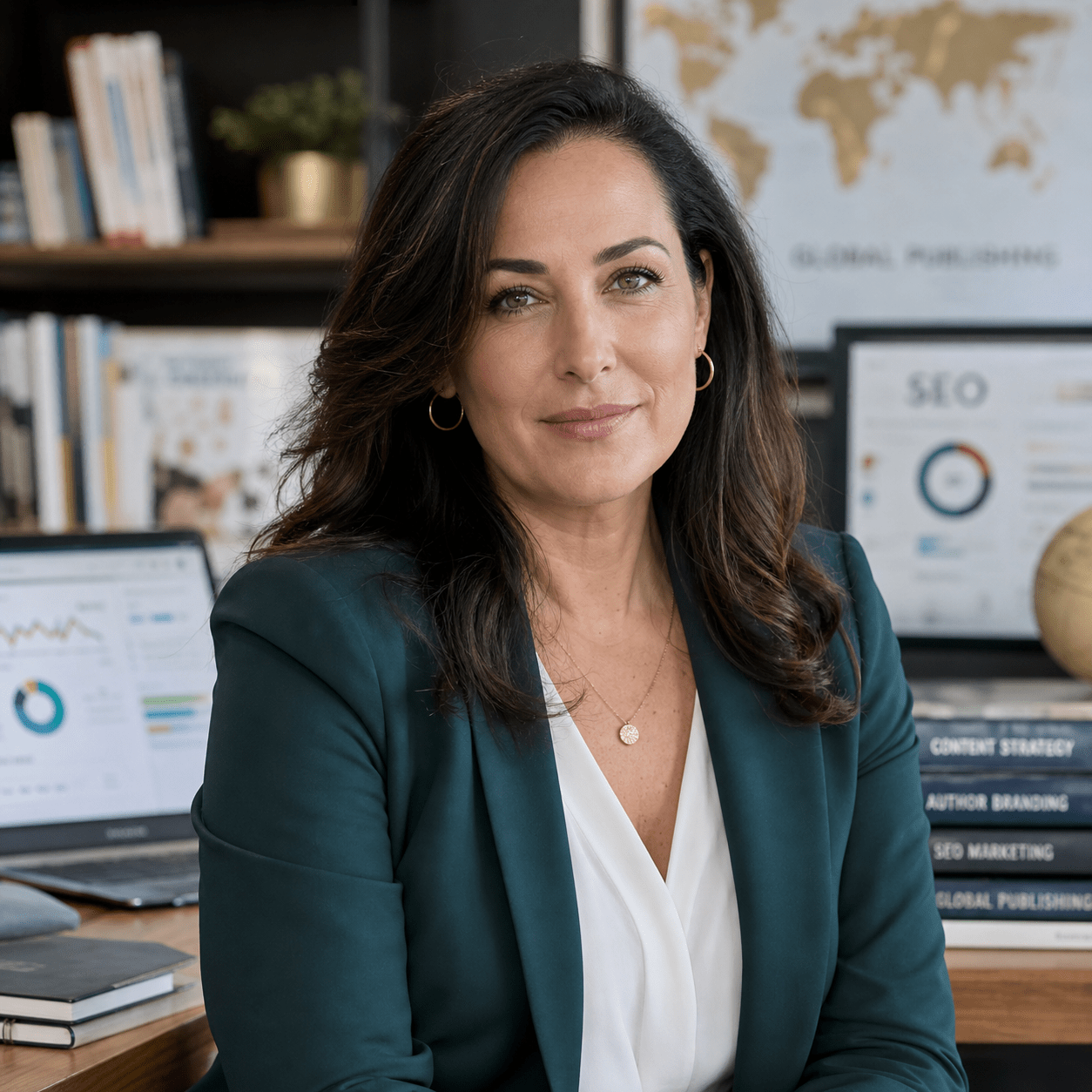
Sophia Grant
Head of Author Marketing, SEO Content & Global Publishing Strategy
Sophia Grant has 10+ years of experience in book marketing, SEO content writing, author branding, wiki writing, translation strategy, and global publishing visibility. She helps authors improve discoverability, reach international readers, strengthen search presence, and build content strategies across English, Spanish, French, Arabic, and translated markets.
- Sophia Grant

- Sophia Grant

- Sophia Grant

- Sophia Grant